Treatment Details

Heart Transplant

Overview

A heart transplant is a surgical procedure that involves replacing a deteriorating heart with a healthier one from a donor. This treatment is typically considered for individuals whose heart condition has not sufficiently improved through medication or other surgical interventions. Although a heart transplant is a significant operation, the likelihood of survival is favourable when accompanied by proper post-operative care.

Who Needs a Heart Transplant?
Heart transplants are necessary in situations such as:
Congenital Heart Diseases: Individuals with this condition face a significantly higher risk of mortality.
End-stage Heart Failure: This condition arises from severe deterioration of the heart muscle, coupled with unsuccessful outcomes from other treatment options.
Myocardial Infarction: Patients with severe coronary artery disease may experience heart attacks that result in scarring of the heart tissue.
Dilated Cardiomyopathy (DCM): This condition involves a weakened left ventricle, which leads to reduced blood pumping efficiency.
Pulmonary Hypertension: Elevated blood pressure in the lungs places additional strain on the right side of the heart.

How is Heart Transplant Surgery Performed in India?
Before undergoing treatment, patients are placed on a waiting list for a donor’s heart. Due to the limited availability of hearts, a selection process is implemented to ensure equitable distribution of organs. Matching is based on the specific blood type and the size compatibility between the donor and recipient.

Just before the heart transplant in India, anaesthesia will be administered to induce unconsciousness and facilitate sleep.
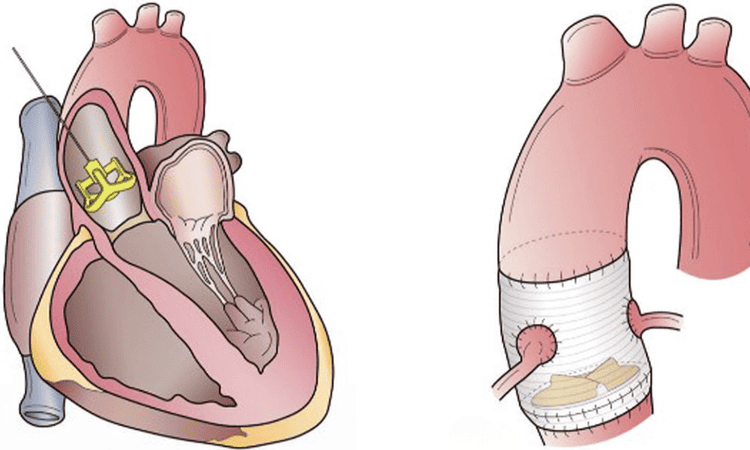
The surgical procedure for heart transplantation is performed using open-heart surgery. Initially, the surgeons make small incisions, approximately 3 to 4 inches in length, to access the rib cage. During the surgery, the heart is temporarily stopped, and a heart-lung machine is utilized to maintain blood and oxygen circulation throughout the body.
Once the transplantation is complete, the surgeon removes the patient’s damaged heart and replaces it with the healthy donor heart.
The main artery, known as the aorta, along with the pulmonary arteries, remains intact, while the major vessels are connected to the new heart.
The transplanted heart begins to beat as soon as blood flow is restored.
If there is any obstruction in blood flow, an electric shock may be administered to ensure the new heart beats properly.

Additionally, post-surgery medications are provided to manage pain. Patients may be placed on a ventilator to assist with breathing, and tubes are inserted into the chest to drain fluids from the lungs and heart. During this period, medications will be administered through intravenous lines.

Post-Transplant Care and Recovery Journey
Post-transplant care is crucial for heart transplant patients to minimize the risk of organ rejection and complications.
After the transplant, patients spend 7 to 21 days in the ICU. During this time, their heart rates, blood pressure, and other vital signs are closely monitored.
They may need a ventilator to help with breathing until they recover.
Once their health stabilizes, they move into a six-month recovery phase. Regular follow-up appointments are essential to check for any signs of organ rejection.
Patients must have RV biopsy tests and catheterizations annually.
They are given immunosuppressants and anti-rejection medications to take at home.
To prevent infections, patients are advised to stay in a clean environment.
Physiotherapy and lifestyle changes help improve their independence.

Benefits of Heart Transplant
Enhances overall quality of life.
Decreases patients’ reliance on medications.
Individuals are more likely to travel and engage in work activities.
Boosts survival rates for patients with serious heart conditions.
Research indicates that heart transplants improve the physical and physiological capabilities of patients, resulting in increased energy levels.

Risks of Heart Transplant Surgery
Heart transplant surgery is a procedure that can significantly enhance a patient’s life; however, it is not without its associated risks. Diligent monitoring, appropriate treatment, and consistent medical evaluations can mitigate some of these potential complications:

Surgical failure
Adverse effects from immunosuppressive medications
Risk of infection
Increased cancer risk
Challenges related to a sedentary lifestyle

Symptoms of Heart Transplant

Diagnosis of Heart Transplant

Causes of Heart Transplant

Treatment Options / Stages of Heart Transplant

Frequently Asked Questions

Q1: What Are the Signs You Need a Heart Transplant?
Ans: The possible warning signs you may need a heart transplant include:

Fever or chill
Redness / swelling / bleeding
Increased pain around the incision
Difficulty in breathing

Q2: How Do You Know If You Need a Heart Transplant?
Ans: A heart transplant is a procedure to consider if you had heart failure that made it hard for the heart to pump the blood around the body. This could be perhaps due to congenital disorders, coronary artery disease, cardiomyopathy, despite surgeries or medications.

Q3: How Are Donors Matched to a Recipient?
Ans: People who are critically ill are approved for a heart transplant and placed on a waiting list. The United Network of Organ Sharing manages the list of heart organs and donor lists. Based on the size of the body and weight, body, and blood type, the patients are donated with an organ.

Q4: What Are the Risks Associated with the Surgery?
Ans: Replacing a heart with a new one requires critical monitoring by the patients. Not every time the patient’s body accepts the new organ. However, in countries like India, where we have achieved world-class medical interventions, a survival rate close to 80–90% is achievable.

Q5: How Long the Surgery Goes On?
Ans: It usually takes around 5 to 6 hours for the surgery to be completed.

Q6: Can We Avoid the Risk of Heart Failure?
Ans: Yes, our lifestyle has a lot to do with our body functioning. Diet also plays a crucial role in the prevention of heart failure. Just in case, avoid smoking, cigarette consumption, take less sugar and salt, cut down unhealthy fat, regulate your blood pressure and blood sugar level.

Get priority care from by connecting with us ​

Treatment Process with Medi Venture Care

We make your medical journey simple, transparent, and stress-free.​

Step 1

Contact & Consultation

Share your medical reports with us, and receive expert medical opinions within 24 hours.

Step 2

Planning & Preparation

Receive support for visa, travel arrangements, and hospital selection based on your needs.

Step 3

Treatment & Aftercare

Get world-class treatment and comprehensive post-care support for a smooth recovery.

Frequently Asked Questions (FAQ's)

Once you leave enquiry with Medi Venture Care, we assign you a dedicated case manager who will organise everything for you thereafter – including hotel booking, airport transfers, online consultation with doctors etc.

Medi Venture Care services are complimentary for patients and patients are NOT overcharged for using Medi Venture Care services. In fact there are high chances, we are able to get you a discounted price which you are unable to negotiate yourself from the service provider.

We have handled cases for Cosmetics, Organ transplants, Cancer cases, Brain and spine surgery, Urology, ophthalmology, Dental, IVF, Orthopedic and joints replacements, Cardiac adult and pediatric with best possible outcomes.

Once you leave enquiry with Medi Venture Care, we assign you a dedicated case manager who will organise everything for you thereafter – including hotel booking, airport transfers, online consultation with doctors etc. Treating doctor asks for detailed history of the patients, chronology of investigations done, treatments undertaken, current symptoms to arrive at the right line of treatment and share the expected cost of treatment.


Medi Venture Care is NABH accredited and ISO 27001 certified to ensure highest standards in managing medical reports and ensuring confidentiality of privacy.

Treating doctor asks for detailed history of the patients, chronology of investigations done, treatments undertaken, current symptoms to arrive at the right line of treatment and share the expected cost of treatment.